Artisan film photographer
Loire Valley – France
Since 2018
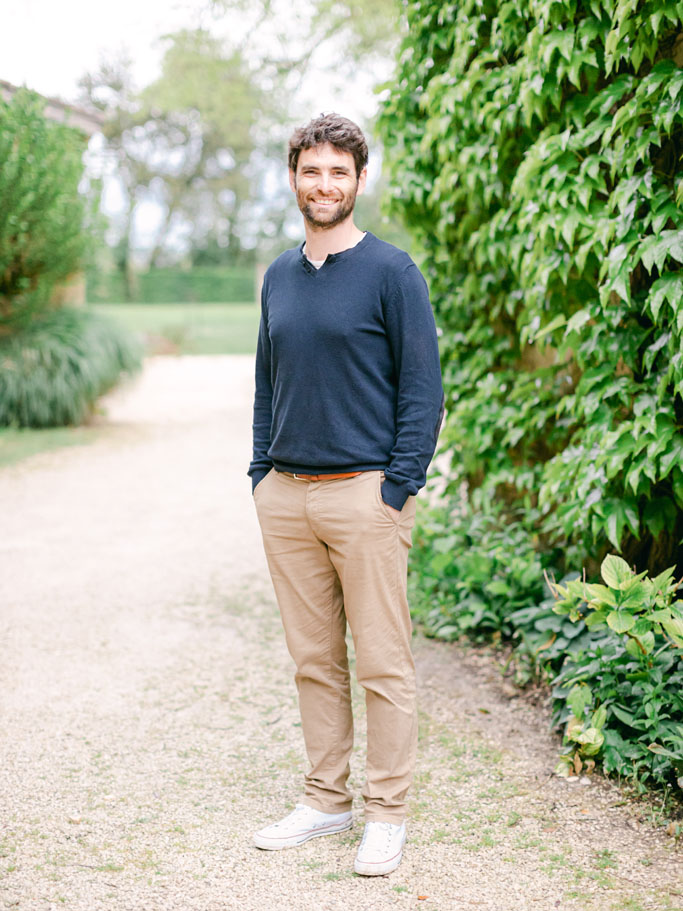
I am a film photographer based in French Loire Valley, passionate about the mysterious and magical process of film photography, travel, which is a source of new experiences and encounters, and the art of storytelling through images. For several years now, I have been putting these passions to work for families who want to preserve and share their history.
I photograph couples, families, and weddings in a documentary style. This approach consists of telling a story through a series of harmonious images, where each portrait and each atmospheric image sketches the bonds that unite people.
Born in 1982 in Rouen, Normandy,
I studied archaeology up to doctoral level in Tours, Loire Valley. For 15 years, my explorations took me from the heritage treasures of Jordan, Syria, Egypt, and Iraq to the prestigious universities of Yale and Princeton in the United States. These journeys, rich in discoveries and encounters, nourished my artistic culture and refined my aesthetic vision.
Photography, an unexpected revelation
Although I was familiar with photography thanks to my father, it was an unexpected loan—a film camera entrusted to me by a friend—that brought back this distant memory. This was the starting point for a period of exploration and experimentation. Determined to master the camera, I devoted my evenings to in-depth study of technique, composition, and color theory. Little by little, a clear ambition emerged: to make photography my vocation.
A decisive encounter
In 2016, my path became clearer thanks to a memorable encounter with Philippe Bachelier, printer for the famous Franco-Brazilian photographer Sebastião Salgado. He passed on to me his unique expertise in developing and printing, essential and timeless steps in analog photography. Since that formative period, I have chosen to devote myself exclusively to film photography. This process, which combines patience, technical skill, and magic, is the very essence of my practice today.
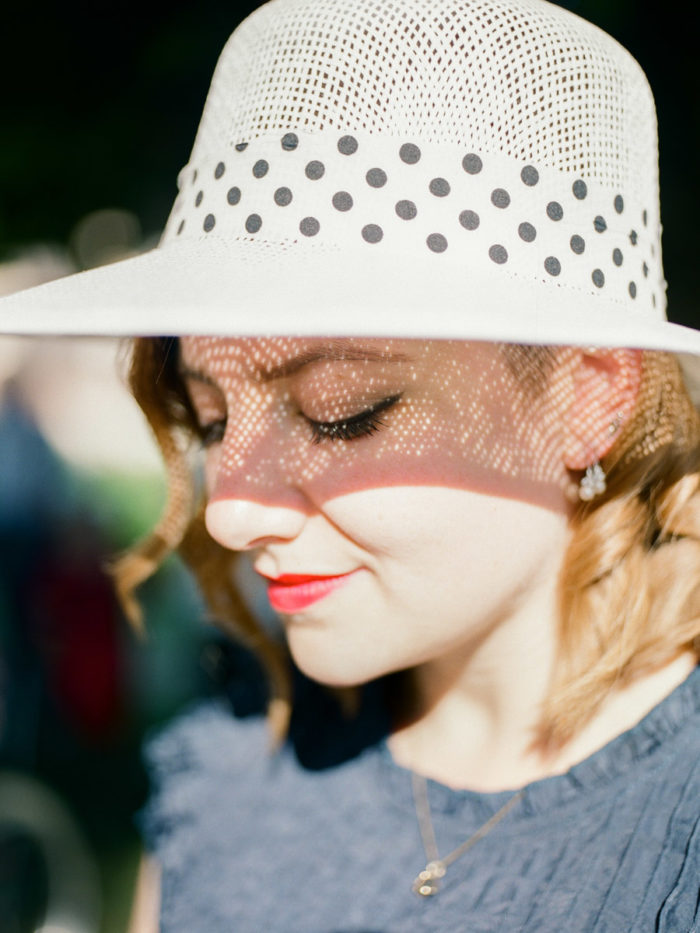
At the crossroads of realism and romanticism, I love photographing everyday family life, whether it be ordinary moments (a walk together), exceptional moments (a wedding), joyful moments (the arrival of a child), or even sad moments (a funeral). My documentary approach seeks to reveal these moments with a touch of poetry, emotion, and a quest for the ideal. My goal is not only to show the world as it is, but to reveal a beauty that transcends appearance, a true poetics of the ordinary.
I do not subscribe to the aesthetics of “Vogue” photographs, where perfectly groomed models strike sophisticated and falsely casual poses, resembling frozen statues, without expression or rough edges. These images lack sincerity and personality.
I don’t like artificial and insincere photographs whose poses transform babies into decorative objects or children into little adults frozen in stereotypes. I reject the idea of treating all subjects in the same way, confining them to a standardized framework dictated by fashion, however aesthetic it may be…
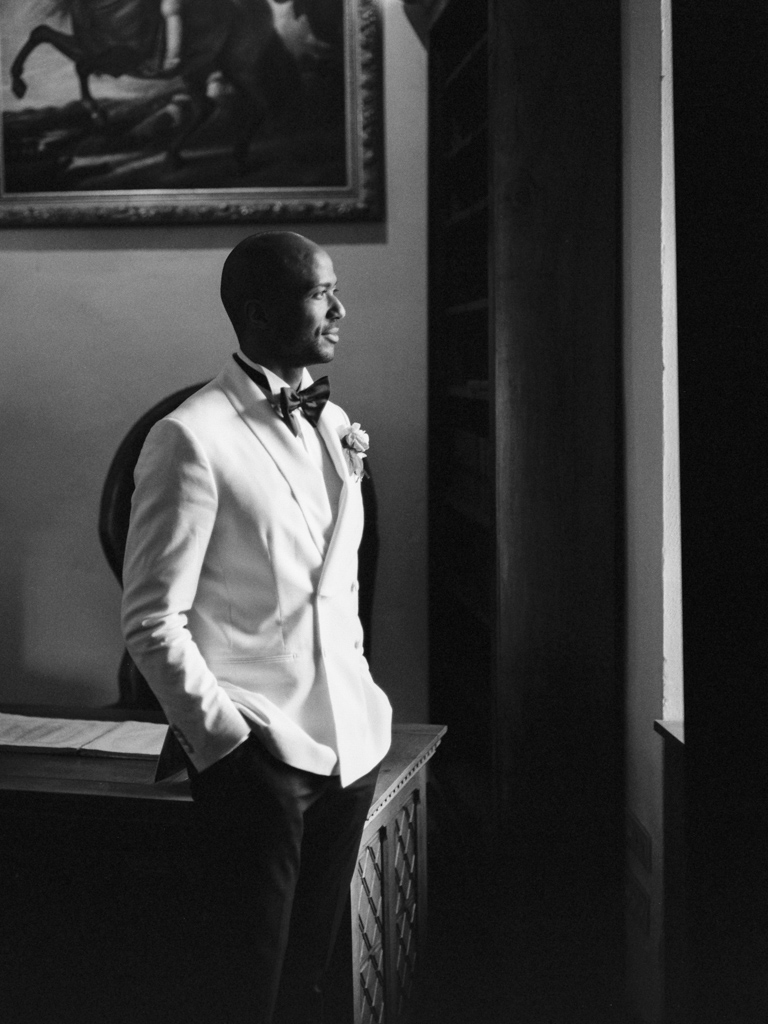
Analog photography plays a central role in my work. It offers an inimitable rendering of colors and naturally reproduces skin tones. Its characteristic grain gives black-and-white images a unique texture. It is this timeless quality, both technical and poetic, that gives each photograph its depth and value.
Natural light and softness
I like to create images imbued with natural light, where the subject is highlighted by a shallow depth of field, infusing each photograph with softness and intimacy.
Intimacy and spontaneity
For me, the true beauty of a portrait lies in its ability to reveal what makes each model, place, object, or event unique. My ideal is to capture moments that combine intimacy and spontaneity, going beyond simple raw and documentary representation to reveal their full beauty.
Gustave Flaubert inspires my work with his realistic and impersonal descriptions. He meticulously describes places, events, and characters, capturing both the general context and the smallest details that reveal personality.
French cinema nouvelle vague is a great source of inspiration. Not so much for its aesthetics as for its approach. Directors filmed with limited resources in order to be as unobtrusive as possible. The scripts evolved as filming progressed, without any mood boards created in advance. The framing was decided on the day itself, depending on technical constraints. This minimalist approach to filming gave the actors a great deal of freedom: to improvise, to be themselves, to act naturally and spontaneously.
Johannes Vermeer and Vilhelm Hammershøi inspire me with their ability to transform scenes from everyday life into moments of great emotional intensity. Their mastery of light and composition lends a silent poetry to the ordinary.
Finally, Walker Evans, with his documentary style, taught me to conceive my photographic projects as literary works, rich in nuance and depth. For him, photography is a deeply personal art: you cannot delegate its creation as you can with painting and apprentices, nor can you take the time to describe every nuance as you can in literature. Photography is based on instinct, guided by our emotions and personality. That is why he considered “this art to be the most difficult of all arts”.